Publications

11 peer-reviewed articles

2026

Personality and Social Psychology Bulletin

The Morality-Effectiveness Disconnect of Pro-Environmental Behaviors

Jareef Martuza & Hege Landsvik

People judge the climate actions that help most, such as flying less, as less moral than actions that help little, such as recycling.

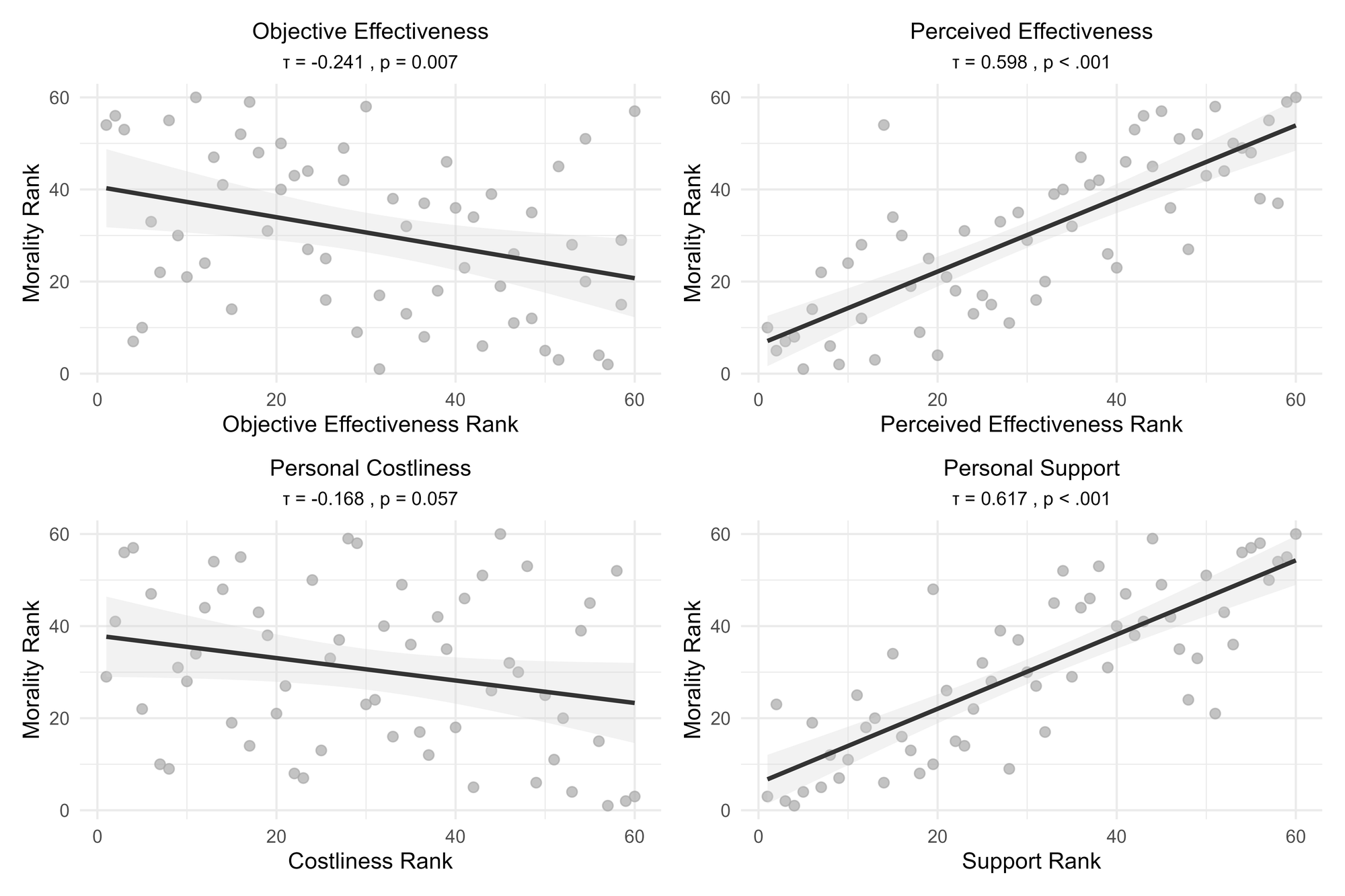
Across 11 studies in five countries (N = 9,247), people judged the climate actions that do the most good, such as flying less, as less moral than actions that do little, such as recycling. Most people expected the opposite. Giving clear information about climate impact reversed the pattern and raised support for policies aimed at the more effective actions.
Right and wrongBeliefs and bias

Rank correlations of moral judgments with objective effectiveness, perceived effectiveness, personal costliness, and personal support across 60 behaviors (Study 2, N = 1,202). Moral judgments track what people think works and what they support, not what actually works.

2026

Journal of Experimental Social Psychology

Revisiting Gino, Ayal, et al.’s (2009) contagion and differentiation in unethical behavior: A registered conceptual replication and extension

Jareef Martuza & Esra Aslan

Seeing a member of one’s own group cheat did not lead to more cheating than seeing an outsider cheat.

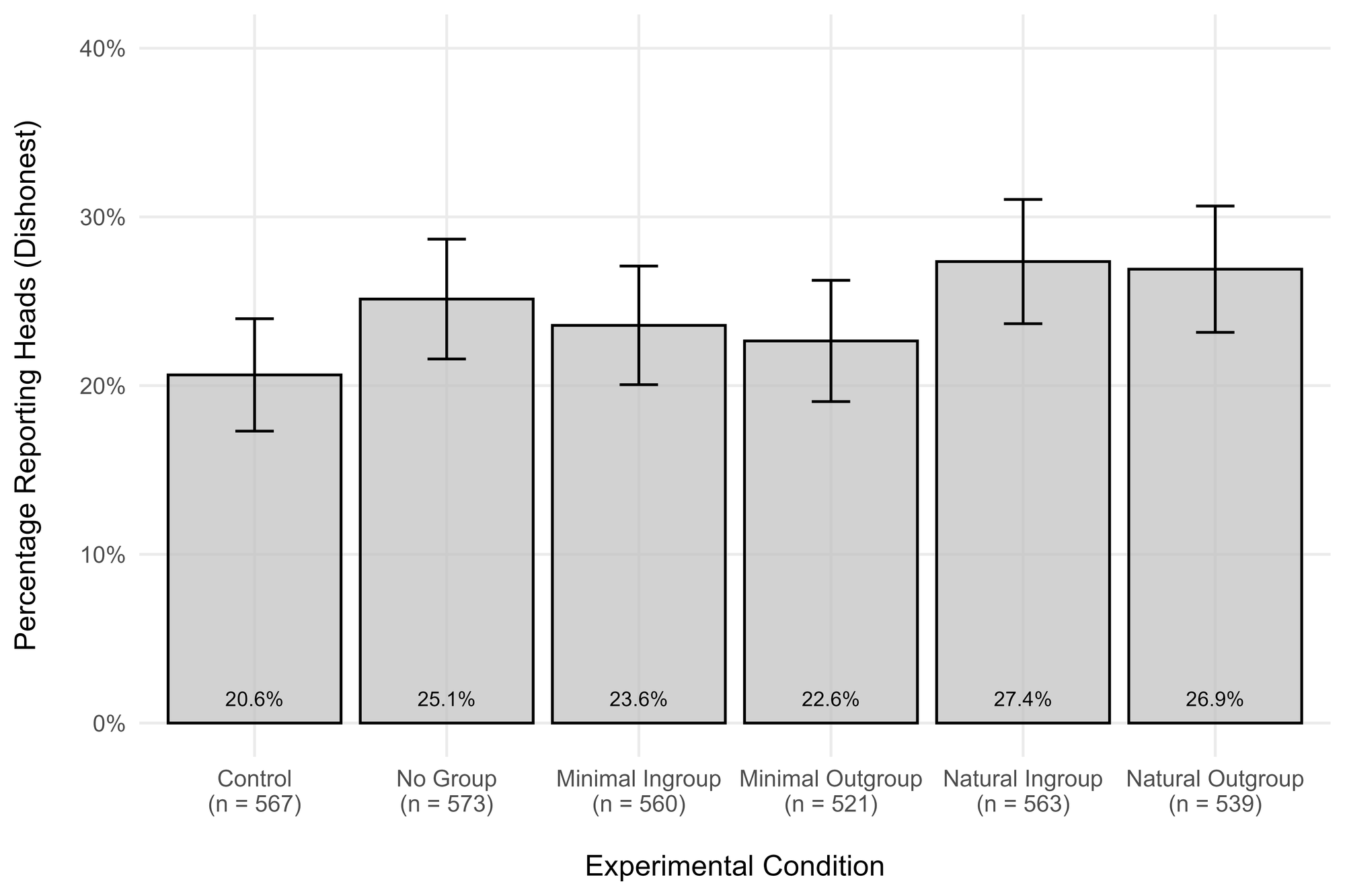
A classic study found that people cheat more after seeing a member of their own group cheat than after seeing an outsider cheat. In a registered report with 3,323 Americans, using both made-up and real groups, we found no such difference, and Bayesian tests favored no effect. Learning about others’ dishonesty through online statistics may not spread cheating along group lines.

Registered ReportRight and wrong

Percentage of participants behaving dishonestly in each condition. Error bars are 95% CIs.

2026

Personality and Social Psychology Bulletin

Does Self-Projection Have a Dominant Temporal Direction? In Nine Countries, People Feel More Similar to Their Future Than Past Selves

Jareef Martuza, Simen Bø, Helge Thorbjørnsen & Hallgeir Sjåstad

People feel more similar to their future selves than to their past selves, in all nine countries studied.

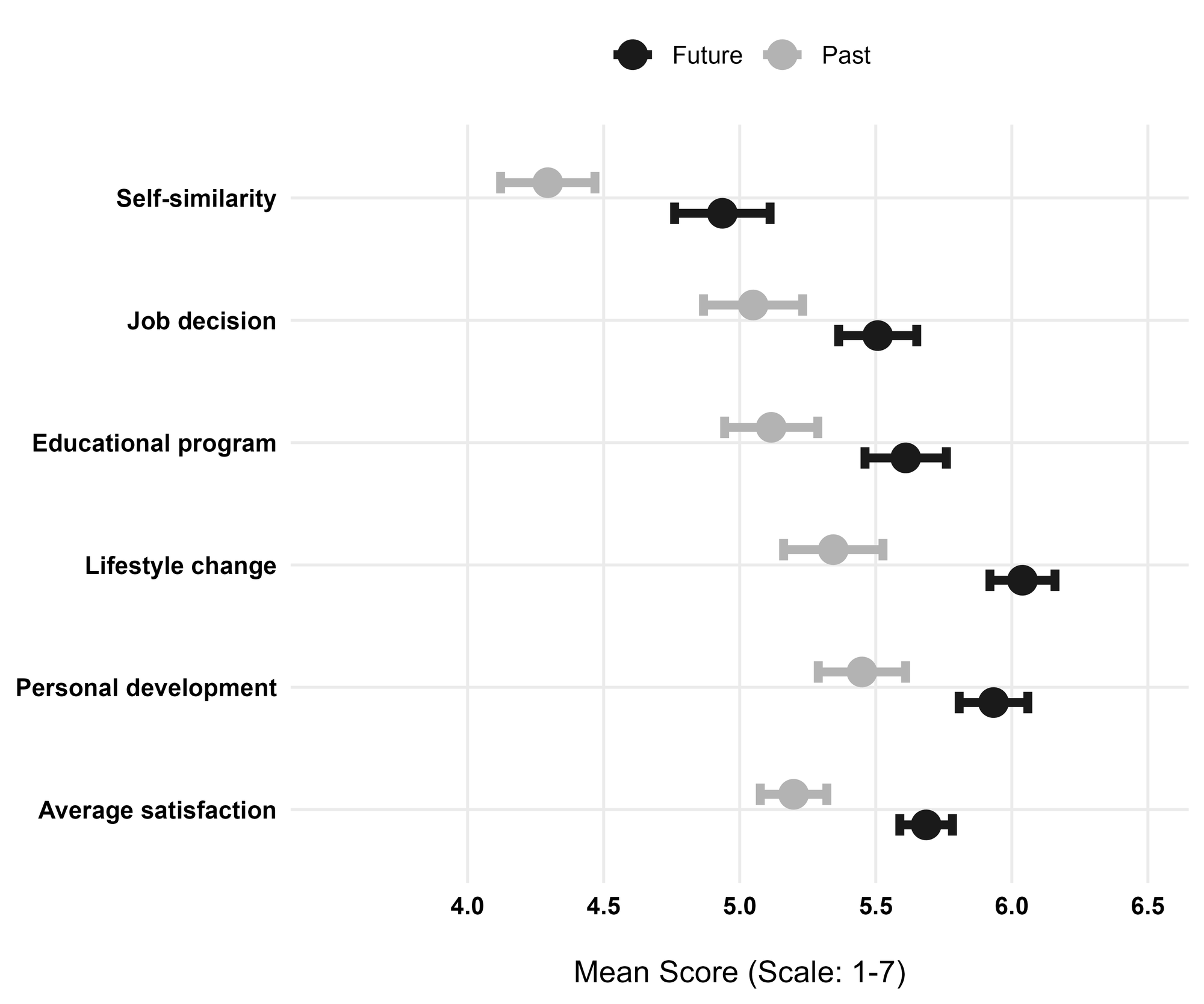
Across 12 studies in nine countries (N = 11,416), people felt more similar to their future selves than to their past selves the same distance away. This goes with feeling closer to the future self and expecting less change ahead. It also skews predictions: people expect their future selves to be happier with today’s choices than they are now with the same choices made in the past.

Time

Self-similarity and decision satisfaction for past and future selves across five life domains (Study 4, N = 567). People predicted higher future satisfaction with decisions made now than they reported for the same decisions made in the past. Error bars are 95% CIs.

2026

Journal of Experimental Social Psychology

Beliefs versus reality: People overestimate the actual dishonesty of others

Jareef Martuza, Helge Thorbjørnsen & Hallgeir Sjåstad

People overestimate how many others would lie by 13.6 percentage points.

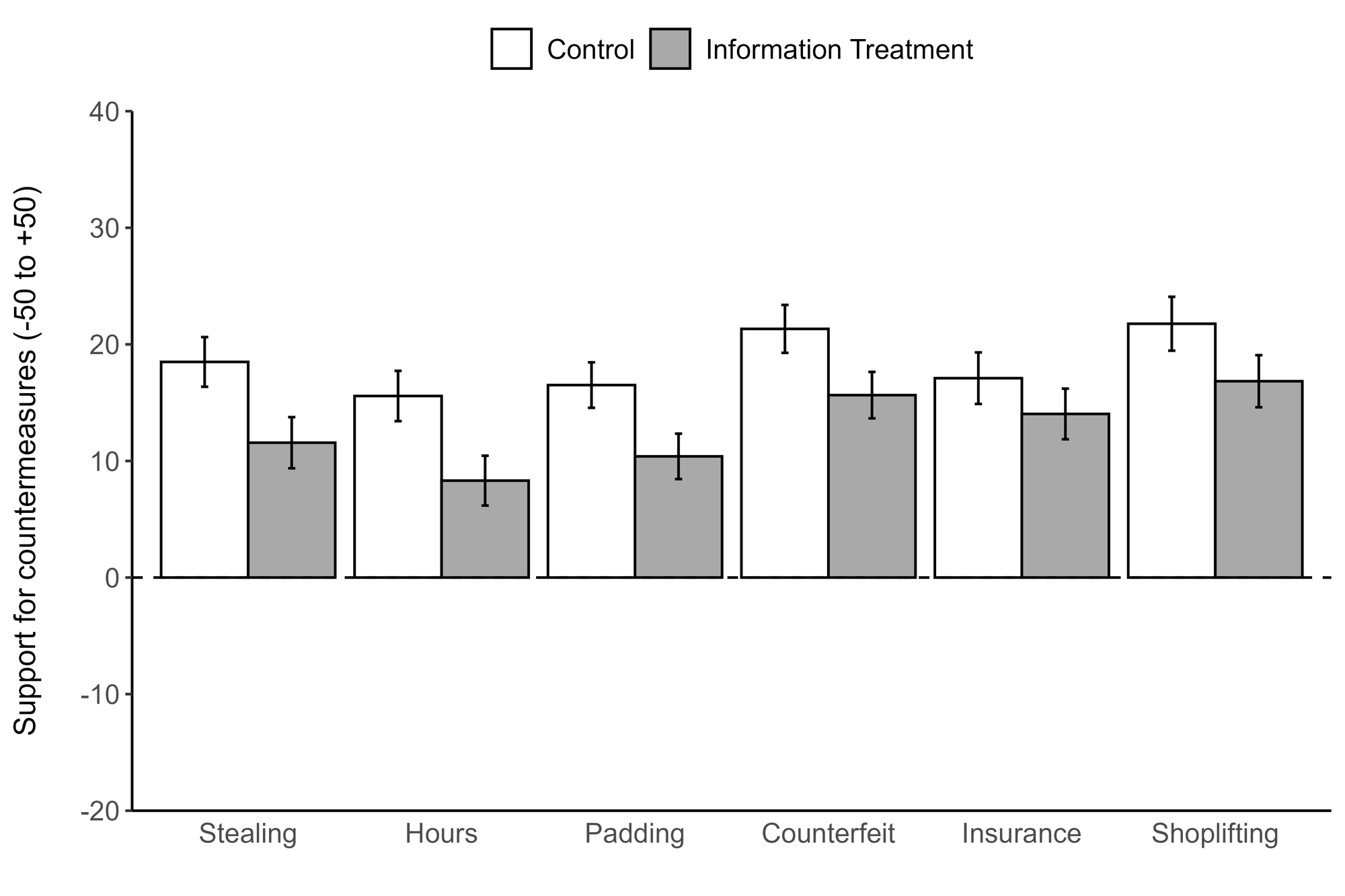
Across 11 experiments in which people could lie anonymously for money (N = 8,126), participants overestimated how many others would lie by 13.6 percentage points on average. Managers were also pessimistic about real-world dishonesty, and that pessimism went with more support for surveillance and other rules that limit freedom. Telling managers the true level of honesty lowered that support.

Right and wrongBeliefs and bias

Support for freedom-restricting countermeasures against six kinds of dishonesty, with and without research-based information about actual honesty levels (Study 4, N = 741). Error bars are 95% CIs.

2025

Journal of Interactive Marketing

Human Is Gold: Why Premium Customers Hate Chatbots and What to Do About It

Aruna Divya Tatavarthy, Jareef Martuza & Helge Thorbjørnsen

Premium customers rate the same chatbot service worse than basic customers do.

Premium customers rate the same chatbot service worse than basic customers do. Three experiments (N = 3,114) show this is partly because premium customers feel more entitled and expect a bot to overlook what makes them unique. Simple changes in how firms frame the chatbot reduced this bias.

Beliefs and bias

2025

Journal of Business Research

The role of social norms in retirement saving: Evidence from two natural field experiments

Trond Døskeland, Jareef Martuza, Lars Jacob Tynes Pedersen, Francisco Santos, Hallgeir Sjåstad & Helge Thorbjørnsen

Telling people what most others do raised retirement saving more than telling them what experts advise.

Two field experiments with Norwegian bank customers (N = 455,509 and 224,000) tested messages that encourage retirement saving. Telling people what most others do raised actual saving more than telling them what experts say they should do. Messages framed around the present worked better than messages framed around the future.

Time

2025

The Journal of Positive Psychology

Not too little and not too much? The relationships between spare time, spare money, and subjective well-being

Jareef Martuza, Micael Dahlen & Helge Thorbjørnsen

More spare money raises well-being up to a point, while a lot of spare time lowers it.

Surveys in the US, UK and Germany (N = 1,288) show that more spare money goes with higher well-being up to a point, after which it stops mattering. Spare time follows an inverted U: well-being rises with spare time at first, then falls when people have a lot of it.

TimeWell-being

2024

Nature Human Behaviour

Effectiveness of ex ante honesty oaths in reducing dishonesty depends on content

Janis H. Zickfeld et al., including Jareef Martuza

The best of 21 honesty oaths nearly halved tax evasion, but neither experts nor laypeople could predict which oaths would work best.

A megastudy with 21,506 UK and US participants tested 21 honesty oaths, designed by 44 experts, in a tax-evasion game. Ten oaths raised tax compliance by 4.5 to 8.5 percentage points, and the best one nearly halved evasion. Neither experts nor laypeople could predict which oaths would work best, though experts came closer.

Right and wrong

2024

Social Psychological and Personality Science

A Registered Report on Gender Bias in Interpersonal Dishonesty: Are Females and Males Cheated Differently?

Jareef Martuza

Women cheated other women 53.6% less than they cheated men.

In a registered report with 3,166 people from nine countries, participants could lie to take money from another person with no risk of being caught. Overall, women were not cheated less than men. But women cheated other women 53.6% less than they cheated men, while men cheated men and women equally.

Registered ReportRight and wrong

2024

Personality and Social Psychology Bulletin

Does Conceptual Abstraction Moderate Whether Past Moral Deeds Motivate Consistency or Compensatory Behavior? A Registered Replication and Extension of Conway and Peetz (2012)

Jareef Martuza & Olivia Kim

Recalling a past good deed made people more willing to help others, whether the deed was recent or long ago.

A widely cited finding says that recalling a good deed from long ago makes people act better, while recalling a recent one lets them act worse. Our registered replication with 5,091 participants did not find this. Recalling good behavior raised intentions to help others whether the deed was recent or distant, with no sign of people making up for past deeds.

Registered ReportRight and wrongTime

2021

Journal of Consumer Behaviour

Do honesty-nudges really work? A large-scale field experiment in an insurance context

Jareef Bin Martuza, Siv Rosendahl Skard, Lavrans Løvlie & Helge Thorbjørnsen

None of three honesty nudges reduced signs of fraud in 5,704 real insurance claims.

In a field experiment with 5,704 customers filing real claims at a large Nordic insurer, we tested three honesty nudges: signing at the start, a message about what others do, and a solidarity message. None of them, alone or combined, reduced signs of claims fraud, though customers who saw a nudge wrote longer descriptions of their losses.

Right and wrong